
Skip to content
Back Home
  • Home
  • Guidelines
    • Summary of the 2017 ACC/AHA/HFSA Heart Failure Management Guidelines
    • Guideline Directed Lipid Lowering Therapy for Cardiovascular Disease Risk Reduction
    • Summary of the AHA/ACC Guidelines on the Management of Lower Extremity PAD (2016)
  • Templates
    • Note Template – Transvenous Pacemaker Insertion
    • Note Template – Code Note
    • Echo Report Summary and Conclusions Templates
    • Note Template – Preoperative Risk Stratification
  • Patient Education
    • Online Heart Failure Management Course– For Patients and Caregivers
    • Atrial Fibrillation
    • Actual Coronary Circulation
    • The Informed Patient’s Guide to Transesophageal Echocardiogram (TEE): Instructions, Checklist and Risk of Complications
    • 3D Animated Models of the Human Heart
    • Implantable Cardioverter Defibrillator (ICD) for Heart Disease
    • Checklist For Your Cardiology Appointment
  • Useful Links
  • Quick Reference
    • Exercise Stress Test: Beyond the ST segment
    • Duke Activity Score Index and METs Calculator
    • Echo Cheat Sheet
    • ICD/Pacemaker Interrogation Tips, Note Template and Perioperative ICD management Tips
    • Important Formulae – Cheat Sheet
    • Suggested Mitral Valve Evaluation Before Referral for Percutaneous Mitral Valve Repair
    • ACE Inhibitor and ARB Dose Equivalency Tables
  • About
  • Search
Back Home
  • Home
  • Guidelines
    • Summary of the 2017 ACC/AHA/HFSA Heart Failure Management Guidelines
    • Guideline Directed Lipid Lowering Therapy for Cardiovascular Disease Risk Reduction
    • Summary of the AHA/ACC Guidelines on the Management of Lower Extremity PAD (2016)
  • Templates
    • Note Template – Transvenous Pacemaker Insertion
    • Note Template – Code Note
    • Echo Report Summary and Conclusions Templates
    • Note Template – Preoperative Risk Stratification
  • Patient Education
    • Online Heart Failure Management Course– For Patients and Caregivers
    • Atrial Fibrillation
    • Actual Coronary Circulation
    • The Informed Patient’s Guide to Transesophageal Echocardiogram (TEE): Instructions, Checklist and Risk of Complications
    • 3D Animated Models of the Human Heart
    • Implantable Cardioverter Defibrillator (ICD) for Heart Disease
    • Checklist For Your Cardiology Appointment
  • Useful Links
  • Quick Reference
    • Exercise Stress Test: Beyond the ST segment
    • Duke Activity Score Index and METs Calculator
    • Echo Cheat Sheet
    • ICD/Pacemaker Interrogation Tips, Note Template and Perioperative ICD management Tips
    • Important Formulae – Cheat Sheet
    • Suggested Mitral Valve Evaluation Before Referral for Percutaneous Mitral Valve Repair
    • ACE Inhibitor and ARB Dose Equivalency Tables
  • About
Patient Education Prevention

Recognize Your Heart Disease Risk

by Cor Doc|Published December 26, 2022

Download Guide

Recognize-Your-Heart-Disease-RiskDownload

You may also like

Understanding Palpitations: Causes and Treatment Options
Published February 16, 2023

Understanding Palpitations: Causes and Treatment Options

Less than half of the patients who present with palpitations have a heart-related underlying cause for palpitations. However, since some of these […]

Published February 5, 2016

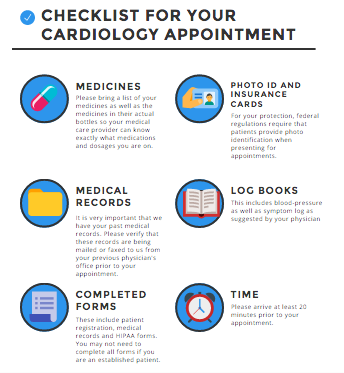
Checklist For Your Cardiology Appointment

Checklist for your cardiology appointment

Prevention of Cardiovascular Diseases
Published July 26, 2018

Prevention of Cardiovascular Diseases

Find more about me at: http://www.dabhadkarmd.com/ Twitter: @KDmph Links: Risk estimation tool: http://tools.acc.org/ASCVD-Risk-Estimator-Plus/#!/calculate/estimate/ Get active:   Go4Life (focused on older adults) by NIH […]

The Informed Patient’s Guide to Transesophageal Echocardiogram (TEE): Instructions, Checklist and Risk of Complications
Published February 15, 2017

The Informed Patient’s Guide to Transesophageal Echocardiogram (TEE): Instructions, Checklist and Risk of Complications

A transesophageal echocardiogram (TEE) offers better picture quality compared to a transthoracic echocardiogram (TTE), particularly of the heart valves. A TEE is commonly performed to evaluate for a thrombus (blood clot), heart valve infection (endocarditis), heart valve dysfunction and diseases of the aorta. It is also often performed to guide heart surgery.

Post navigation

  • Previous post USMLE: Should I or Should I Not?
  • Back to post list
  • Next post Understanding Palpitations: Causes and Treatment Options

• About

• Disclaimer

© 2026 Cordoc – All rights reserved

Powered by WP – Designed with the Customizr theme